Zombie Waves
- 4.5
- Rating
- 10.00M
- Installs
- Free
- Price

 Analysis by App-foxy
I spent time with Zombie Waves as a free-to-play adventure game, and my first impression was clear: it wants to turn the familiar zombie-survival formula into short, repeatable runs where movement, automatic attacks, and quick decisions matter more than complicated controls. That makes it easy to pick up, but the simplicity hides a surprisingly important question: can you enjoy improving from one attempt to the next without feeling pushed toward spending?
My answer is mostly yes, with some qualifications. The game is at its best when I have a few spare minutes and want immediate action rather than a long story campaign. It is less convincing for anyone looking for a carefully written narrative, a traditional twin-stick shooter, or a completely relaxed experience with no pressure from progression and purchases. Fun Formula has built something accessible and energetic, but the long-term appeal depends heavily on whether you enjoy repeating runs and experimenting with upgrades.
What the current version feels like to play
The basic rhythm is straightforward. I enter a stage, guide the character around the battlefield, avoid incoming enemies, and let the combat system handle much of the attacking. That leaves my attention free for positioning and choosing improvements as the run develops. The result feels closer to a survival-focused roguelike than to a conventional shooter where I manually aim every bullet.
You May Also Like

 Google Keep - Notes and lists
Google Keep’s Quiet Growth Shows the Appeal of Simpler Notes
As mobile work gets busier, Google Keep keeps winning a simple contest: capture a thought quickly, find it later, and get on with the day.

 Blood Strike: 2.5 Anniversary
Blood Strike’s Loadouts Turn Every Drop Into a Tactical Gamble
A close look at Blood Strike’s custom loadouts: how fast access to signature weapons reshapes its battle royale rhythm, rewards preparation, and narrows the gap between fights.

 Pandora - Music & Podcasts
Pandora’s Music Is Easy to Start, but Harder to Recover
Pandora’s strength is its low-effort path from a seed to a station. Its weak spot is how much confidence it asks you to place in connection, setup, and quiet recovery.

 8 Ball Pool
 Is Built on Rivalries, Rematches, and Routine
A close look at the rivalries, rematches, shared routines, and unanswered safety questions that turn a quick pool match into a persistent mobile community.

 Samsung Music
’s Quiet Strength Is Playing What You Already Own
Its reach comes less from spectacle than from dependable access to a personal library. That simplicity is both the app’s strongest retention engine and its ceiling.

 AccuWeather: Weather Radar
AccuWeather Review: A Quick, Clear Forecast for Everyday Decisions
For everyday plans, the best forecast is the one you can understand quickly. AccuWeather makes rain timing, radar, and local conditions easy to act on, with a few trade-offs.
More From Our News Desk



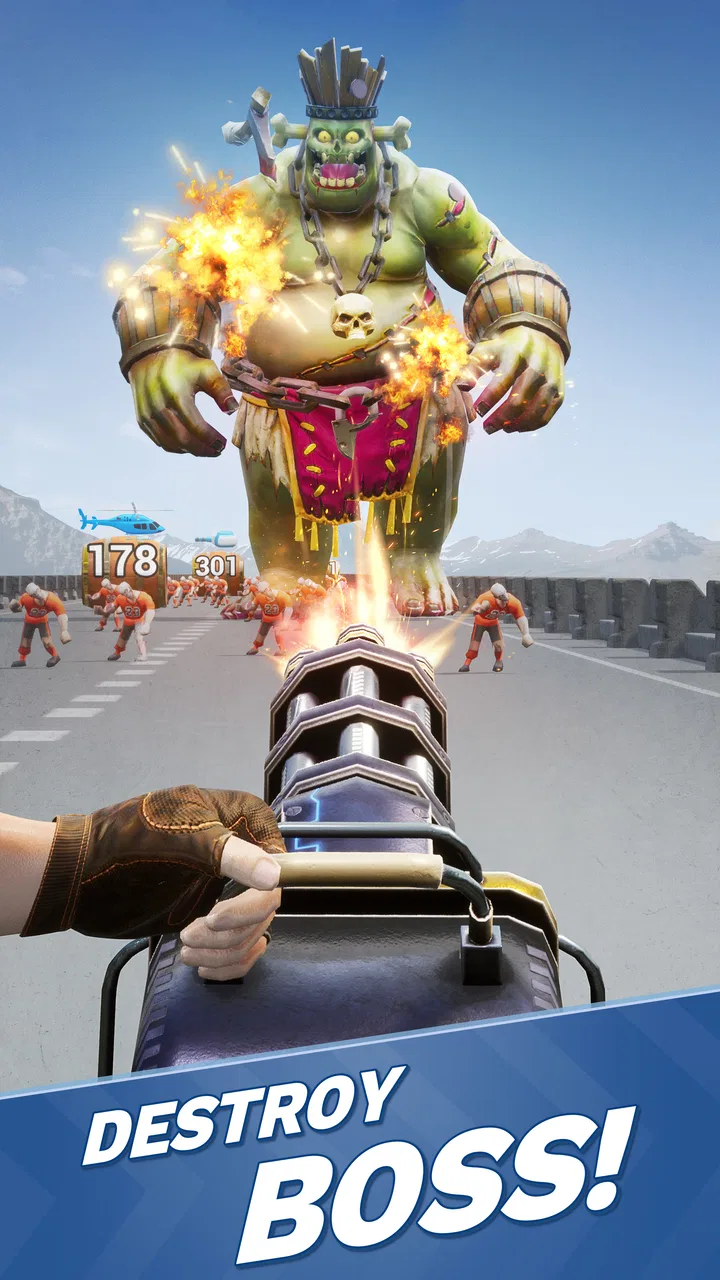
That distinction matters. If you expect precise aiming, cover mechanics, or a slow tactical pace, this is not really that kind of game. The pleasure comes from keeping distance, reading the shape of a crowd, finding safe movement lines, and building a stronger loadout during the attempt. I found myself watching the edges of the screen as much as the character, because a careless turn can allow enemies to close in from several directions.
The three-dimensional presentation gives the action more presence than a flat arena, although it does not transform the formula into a full console-style adventure. The camera and visual effects are there to make the waves feel dramatic, while the underlying decisions remain deliberately simple. That combination is useful on a phone: I can understand what is happening quickly, even when the screen becomes busy.
The game is listed for players aged Everyone 10+, which fits its accessible presentation. It uses zombie danger and combat as the central theme without requiring the grim tone or graphic intensity found in more mature action games. I would still keep the age guidance in mind for younger players, particularly because the repeated combat and purchase options are part of the overall experience.
The first few sessions are easy to understand
One of the strongest design choices is how quickly the game communicates its loop. I do not need to study a large control scheme before trying a stage. The early experience teaches me through play: move, survive, collect opportunities to improve, and make the next run more effective. That makes it suitable for someone who normally avoids complicated roguelikes.
However, easy controls do not mean every decision is obvious. A new player can survive by moving constantly, but better results require more awareness. I had to learn when to keep circling, when to pass through a temporary opening, and when an attractive upgrade was less useful than a choice that supported my existing build. Those small decisions are where the game becomes more interesting than its store summary suggests.
A practical tip is to avoid treating every run as a race toward maximum damage. Movement is part of the defense system, and an upgrade that helps maintain space can be more valuable than one that looks stronger on paper. When the enemy group becomes dense, a balanced build gives me more room to recover from a mistake than a narrowly focused attack setup.
Why the roguelike structure works on a phone
The run-based format suits mobile play better than a long uninterrupted campaign. I can start a session while waiting for an appointment, play during a commute when conditions allow, or complete a few attempts before putting the phone away. There is a satisfying sense of progress even when a run ends badly, because the failure gives me information about positioning and upgrade choices.
That convenience comes with a trade-off. The same structure can become repetitive if I do not enjoy trying different approaches. A player who wants a fixed sequence of handcrafted levels may prefer a traditional action adventure. Here, the appeal is repetition with variation: I return to a familiar type of challenge and try to handle it more intelligently.
In an everyday scenario, I can imagine using it during a short break at work. I would not choose it if I needed a calm game that I could pause mentally while multitasking, because the later moments demand attention. I would choose it over a lengthy role-playing game when I wanted immediate action without remembering a complicated plot or inventory system.
How progression changes the experience
The most important long-term feature is the relationship between a single run and the broader progression. During play, each improvement affects the current attempt. Across attempts, I am encouraged to understand what went wrong and return with a better plan. This creates the familiar roguelike tension: a run can end quickly, but the next one feels promising because I know more than I did before.
I recommend paying attention to combinations rather than selecting upgrades in isolation. A choice that looks modest can become useful when it supports the way I already move and fight. For example, if I am relying on constant circling, I should value options that help me maintain that rhythm instead of choosing a powerful-looking effect that forces me into closer danger. The game rewards consistency more than random shopping through every available improvement.
Another non-obvious lesson is to use the arena itself as part of the build. I initially focused on the character and attacks, but survival often depended on leaving enough open space for the next few seconds. Spending an upgrade opportunity on damage does not help if my movement route is already blocked. Thinking ahead about where the crowd will go made later attempts feel more controlled.
There is also a useful distinction between learning the game and simply becoming stronger. Some failed runs are not fixed by better numbers. They fail because I turn too sharply, allow enemies to surround me, or chase a reward into an unsafe position. That is good design for this type of game, because it gives skill a role alongside progression. Still, players who dislike repeating a stage to improve may find the loop frustrating rather than motivating.
What version 4.5.1 means for a new player
The current version is 4.5.1, so a new player is joining a product that has already moved beyond its earliest release. The game first appeared on September 27, 2022, and that history is relevant when judging its current state: this is not an untouched experiment waiting to prove its basic idea. It has had time to establish its identity around zombie waves, short runs, and upgrade-driven survival.
I would not interpret the version number as a promise that every rough edge has disappeared. A later version can indicate ongoing maintenance without guaranteeing that the game matches every player’s preferred balance. What I can say from the current experience is that the core loop feels defined rather than confused. The developers know what kind of mobile action game this is trying to be.
For existing players, the practical effect of a mature current version is that learning the fundamentals remains worthwhile. The central habits—keep moving, preserve escape routes, and choose upgrades as a connected plan—are not disposable tricks. They form the foundation of the game rather than a temporary tutorial approach. New players should therefore spend time improving decision-making instead of assuming that progress is only about unlocking more power.
The game has reached over ten million installs, with an average rating of 4.5 from around 380 thousand ratings. Those figures suggest that the basic concept has found a broad audience, but they should not replace personal judgment. A popular survival shooter can still be a poor fit if you dislike repeated runs, automatic combat, or free-to-play progression.
Where it stands against similar mobile choices
Compared with a conventional mobile shooter, this game asks less from my aiming hand and more from my movement decisions. That makes it friendlier when I am playing on a small screen or using one hand, but it also removes some of the satisfaction that comes from lining up a precise shot. Players who want direct weapon control should look elsewhere within the action genre.
Compared with a slower adventure game, it offers less emphasis on exploration and story discovery. I spend more time managing threats than examining a world or following character relationships. The advantage is immediacy; the disadvantage is that players seeking emotional storytelling may find the experience thin.
Compared with other roguelike survival games, its zombie theme gives the waves a recognizable identity, while the three-dimensional presentation makes the action feel more like an active battlefield. The trade-off is familiar: the more accessible the controls become, the more the game depends on upgrade choices and repeated attempts to maintain depth. I think it works best for people who want a readable mobile version of the survival formula, not for experts demanding the complexity of a full desktop roguelike.
Free access, purchases, and the real commitment
The game is free to download, which makes trying the core loop an easy decision. There is no need to commit money before discovering whether the movement-based combat suits me. That is important here because the main question is not whether the presentation looks appealing; it is whether I enjoy repeating the same broad survival pattern while refining my choices.
In-app purchases range from $0.19 to $299.99 per item. That is a very wide span, and it changes how I would advise a friend to approach the game. I would begin with a firm personal spending limit and play long enough to decide whether enjoyment comes from learning or from accelerating progress. The free entry point is a genuine advantage, but purchase availability means the game should not be treated like a one-time paid product with a fixed experience.
My practical advice is to avoid buying anything during the excitement of a difficult run. A loss can make a shortcut feel more valuable than it really is. I would first identify the actual problem: poor movement, an unsuitable upgrade path, or a genuine progression wall. If better positioning solves the issue, spending money would only hide the lesson that helps on future stages.
Families should also remember that the age rating and purchase system answer different questions. The Everyone 10+ rating describes the intended content level, while purchase options concern spending habits. If a child uses the device, I would set clear rules before allowing play. That is not a criticism unique to this title; it is simply sensible whenever a free game includes optional items across such a broad price range.
Who will enjoy it most
I would recommend it to players who like action that starts quickly, enjoy seeing a build develop during a run, and do not mind trying again after failure. It is especially suitable for someone who wants more decision-making than an idle game but less manual aiming than a traditional shooter. The controls are approachable, yet there is enough room to improve through movement and planning.
It also works for players who enjoy short sessions with a clear objective. I can play without setting aside an entire evening, and the run structure gives each attempt a natural beginning and end. That makes it easier to fit into a busy day than a story-heavy adventure that expects me to remember a large map or a long chain of quests.
I would skip it if I want a peaceful game, a deep narrative, or an experience that feels completely different each time. I would also hesitate if I dislike free-to-play economies on principle, even when the download costs nothing. People who need precise aiming and manual weapon control may enjoy a dedicated twin-stick shooter more, while those who want exploration should choose a conventional adventure game instead.
What I would like to see next
The current version gives the game a stable identity, but the areas I would watch are variety, balance, and how fairly progression feels over longer play. The basic loop is strong enough to support continued play, yet repetition can expose any shortage of meaningful choices. New content would matter most if it encouraged genuinely different strategies rather than simply increasing enemy strength.
I would also pay attention to whether future changes preserve the value of skill. The best moments come when I survive because I read the crowd correctly, not because I purchased a stronger option. If progression becomes too dominant, the satisfying connection between movement and success could weaken. On the other hand, if later challenges remain demanding without becoming unfair, experienced players would have a reason to keep refining their approach.
For someone deciding whether to install it now, my suggestion is simple: treat the first sessions as a test of the loop, not a race toward the highest progression point. Notice whether you enjoy steering through danger, choosing upgrades under pressure, and learning from failed attempts. If those three activities feel rewarding, the game has a good chance of holding your attention. If they feel repetitive immediately, additional progression is unlikely to change your basic reaction.
Fun Formula has made a focused adventure game rather than an all-purpose zombie experience. Its strongest qualities are readable controls, quick access to combat, and a progression loop that can turn small tactical improvements into meaningful survival. Its weaknesses are equally clear: repetition may set in, automatic attacks will not satisfy everyone, and the broad range of optional purchases requires self-control.
After playing it, I see Zombie Waves as a good recommendation for a friend who wants a free mobile roguelike with a zombie setting and short, active runs. I would explain the limitations before recommending it, especially the difference between a free download and a completely pressure-free game. For the right player, that balance of movement, survival, and build experimentation is engaging. For everyone else, a more traditional shooter or story-led adventure will probably be the better choice.
The game is available for Android devices running version 8.1 or later, and its current release is 4.5.1. With around 6.7 thousand written reviews and a 10M+ install milestone, it has clearly attracted a substantial audience. My final view is positive but measured: try it without spending first, learn how much of the fun comes from your own decisions, and only continue if the repeated survival loop feels like entertainment rather than a chore.
FAQs for Zombie Waves
01What is Zombie Waves about?
Zombie Waves is an action-packed survival game where players must fend off relentless waves of zombies. Set in a post-apocalyptic world, the game challenges players to strategize and utilize various weapons and upgrades to survive. It offers a thrilling experience with engaging graphics and intense gameplay.
02Is Zombie Waves free to play?
Yes, Zombie Waves is free to download and play. However, it offers in-app purchases that can enhance the gaming experience. Players can buy items like weapons, upgrades, and skins. These purchases are optional and not required to progress, but they can provide an edge in surviving tougher waves.
03What are the system requirements for Zombie Waves?
Zombie Waves is available on both Android and iOS platforms. For Android, it requires version 5.0 or higher, and for iOS, it requires iOS 10.0 or later. The game is optimized to run smoothly on most modern devices, but having a device with at least 2GB of RAM is recommended for the best experience.
04Does Zombie Waves support multiplayer mode?
Currently, Zombie Waves is designed as a single-player experience focusing on individual survival against zombie waves. While it does not support multiplayer mode at this time, the developers are considering future updates that may include cooperative or competitive multiplayer options.
05How does the upgrade system work in Zombie Waves?
In Zombie Waves, players earn points and resources by defeating zombies, which can be used to upgrade weapons and abilities. The upgrade system allows players to enhance their firepower, improve defense mechanisms, and unlock new skills. This progression system is crucial for tackling more challenging zombie waves as players advance.
Pros
- Intuitive controls make gameplay smooth.
- Diverse weapon selection for strategy.
- Engaging graphics enhance immersion.
- Daily challenges keep content fresh.
- Multiplayer mode adds social fun.
Cons
- In-app purchases can be pricey.
- Ads can interrupt gameplay.
- Limited story depth for solo play.
- Requires constant internet connection.
- High battery consumption on mobile.

Zombie Waves
Gallery